
When to Move from Assisted Living to a Nursing Home

How do you know when to move from assisted living to a nursing home? There is no specific timeframe that applies to each person, but in every case, it is critical to determine what type of care you need.
An assisted living community offers the opportunity to maintain independence while receiving support to meet most of your daily needs. A nursing home may be necessary when complex health issues require 24-hour nursing care and continuous medical supervision. Skilled nursing facilities provide specialized services, including physical, occupational, and speech therapy, as well as wound care and intravenous (IV) therapy.
Nursing home services differ significantly from those provided by assisted living communities. But what exactly are these differences, and how do they impact the level and type of care you may need?
What Is an Assisted Living Community?
Assisted living is a residential community that provides a non-institutional environment for people who can provide for many of their own needs. Some locations may offer some support, such as aiding in managing diet and nutritional needs. Some also help with incontinence. Some help with the highest levels of care including feeding, transfering, and behaviors. Additionally, many will offer medical care in addition to custodial care and have nurses on staff to oversee resident’s care. The assisted living level of care is for older adults who could be frail but do not need 24-hour medical nursing care. Residents may also benefit from having some of their medical needs addressed by a home health service that will come into the community.Assisted living helps with activities of daily living such as housecleaning, meals, dressing, and medication reminders and monitoring. The average assisted-living resident is 84 years old and needs help with two or three of the activities mentioned above. Assisted Living has a vibrant and social appeal as there are numerous offerings to stay active and engaged in life enrichment activities.
Some older adults move into assisted living because living alone may not be safe for them due to the risk of falling, memory difficulty, or the risk of taking the wrong medication or an incorrect dosage. Moving into assisted living provides you with the support you need now, and that may delay your need for more advanced care until some time in the future if you do not need that level of care right now.
A licensed nurse may be available to provide individualized care. Staff may be on site 24 hours a day, depending on the community’s rules and regulations for that state. . However, in some communities, the assisted living medical team is not available 24 hours a day.
Keep in mind that each community sets its own objectives, based on specific state regulations. You should always clarify what is expected.
While intense memory care for those who have end-stage Alzheimer’s disease or dementia, some assisted living communities will incorporate a memory care element to them. This will allow your family members to have the type and level of help they need right now, with the ability to step up care over time as their condition changes.
Assisted living communities handle many of the more difficult tasks for those who are older. That could include light housekeeping, meal preparation, transportation for grocery shopping or medical appointments, and other tasks.
What Is a Nursing Home?
A nursing home provides a higher level of care with nursing support. This means your loved one will receive around-the-clock assistance from nurses and other medical professionals. Nursing homes have a more clinical environment and can address medical needs, such as wound care, intravenous therapies, and ventilation care. While you may assume skilled care is necessary, many assisted living communities can offer a much higher level of support than you might realize.
In a nursing home, your loved one will likely reside in a semi-private or private room, depending on their preference, budget, and availability. They may visit the dining room for meals and participate in activities in various areas. However, if they need to eat in their room, assistance is readily available.
The most important difference between an assisted living community and a nursing home is that a nursing home is regulated by federal mandates and typically offers short term acute rehabilitative care offered 24 hours a day by a team of licensed professionals which are funded by medicare. While most people will use skilled nursing for short-term needs, your loved one may require medical treatment that cannot be managed at home or in an assisted living community.
- Intravenous therapy
- Ventilation care
- Hourly monitory of vital signs or blood sugars
- Injections of medications
- Wound care
- Post-surgery care
Compare the differences between care options:
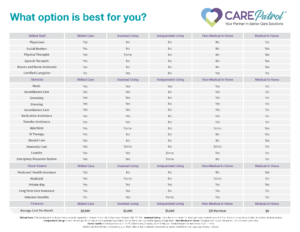
Some care settings may be better suited for your loved one if they have complex medical conditions that you cannot manage properly around the clock. Many facilities also offer specialized memory care units for end-of-life needs.
The nursing home setting is designed to meet both the needs of the residents and the specialized care they require, which can sometimes feel more institutional. You may find supportive solutions for therapy, such as specific functional rehabilitation services, infusion therapy, or wound care treatments. Options for providing separate rooms for older adults with infections or illnesses might also be available. However, even in nursing homes, intensive care is not typically provided, and your loved one may be transferred to a hospital to receive the highest level of care when necessary.
Frequently Asked Questions
What is the average length of stay at an assisted living community?
Many people live in assisted living for 2 to 3 years. They often then move to nursing homes that can better meet their ongoing needs due to worsening health conditions, limited mobility, memory care needs, or more support.
What is the main difference between assisted living and nursing homes?
The difference in nursing home care is the level of medical care and support you receive. Skilled care means more licensed nurses and staff available to provide ongoing care.
What are signs to know it’s time to move?
Senior living options are extensive, but there are a few signs to monitor for to know when it’s time to move:
- You need extensive care for daily living
- You are leaving a hospital stay without the ability to manage most of your own personal care
- Your well-being is dependent on skilled care around-the-clock
- Changes in mental cognition can also play a role in this need
- Assisted living facilities cannot meet any specific care needs you have
CarePatrol Can Help You Determine When to Move from Assisted Living to a Nursing Home–and Which one to Choose
CarePatrol has local senior care advisors nationwide who are ready to help you determine when it’s time to move to a nursing home and find the best senior care solution. Also, if care needs change in the future, your local senior care advisor will help you find the right community.
We partner with over 20,000 senior care communities across the nation and take families on tours of the communities so you can view the accommodations and feel confident in your decision.
To get started, find a CarePatrol location nearest you, or learn more about care options and request more information online.